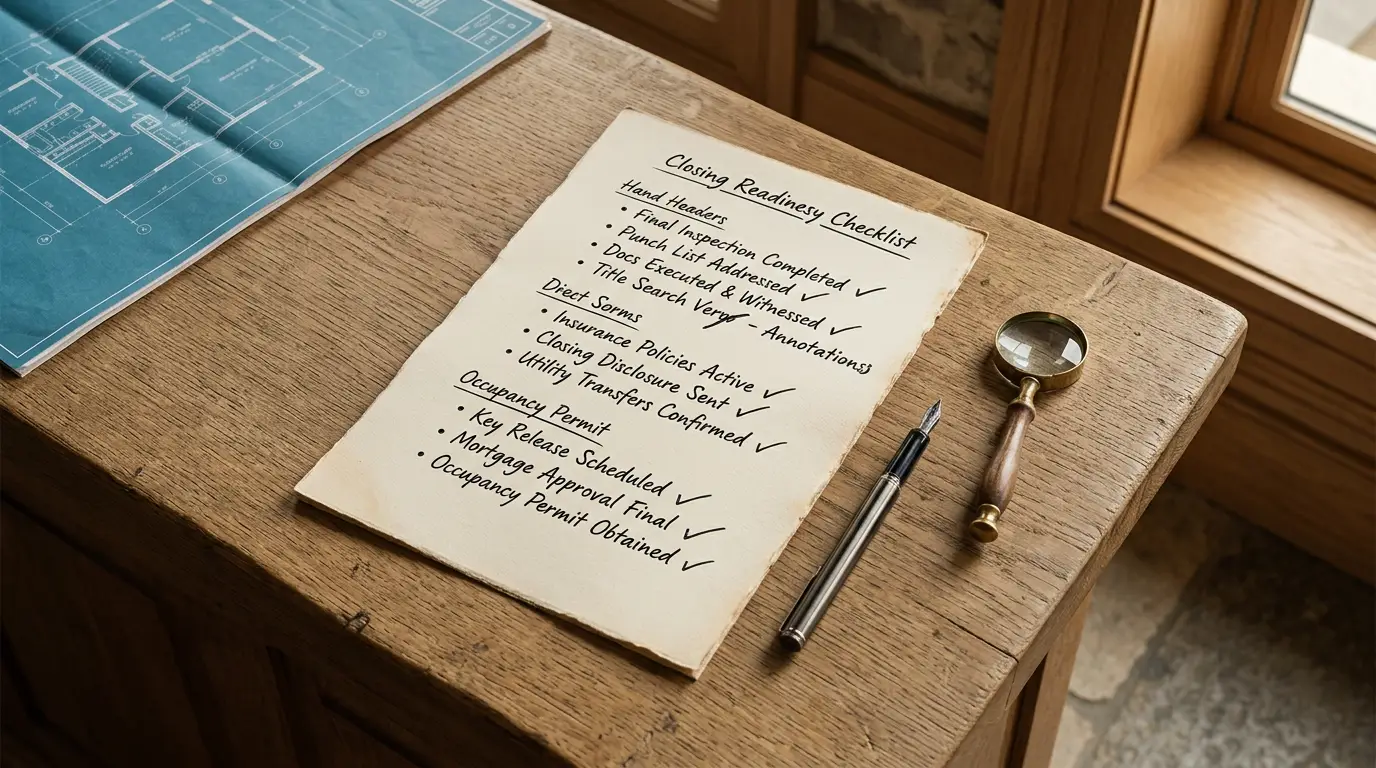


Closing readiness is a coordinated view of whether each buyer has the required evidence, known blockers, responsible owners, and next approved action for the project’s closing process. It is not a declaration that a buyer is legally cleared to close. The closing team, legal counsel, lenders, title partners, and other authorized parties retain their own decisions; buyer operations makes the handoff evidence visible and prevents routine gaps from being discovered only at the end.
Key takeaways
- Use one buyer-and-unit readiness record, but preserve the source systems and specialist decisions behind it.
- Separate evidence collection, operational readiness, and final authority to close.
- Name one owner and next action for every blocker.
- Review readiness on a defined cadence as milestones approach.
The buyer handoff plan
| Handoff area | What the operating view should show | Decision owner |
|---|---|---|
| Buyer identity and contact context | Current contact route and required evidence state | Authorized reviewer |
| Contract and document set | Required items, source location, review state, missing evidence | Legal/contract owner where applicable |
| Payment context | ERP-backed schedule and reconciliation status | Finance |
| Project milestones | Published milestone context and outstanding buyer tasks | Project or post-sale owner |
| Exceptions | Issue, impact, responsible owner, next step, decision history | Assigned authorized owner |
Run the handoff in three passes
First, prepare: define the project-specific readiness requirements and their authorized owners. Second, review: identify the buyers with missing evidence, conflicting records, or pending decisions. Third, hand off: package the relevant buyer and unit context for the next team, including source links and a clear list of unresolved items. Repeating these passes at a predictable cadence turns a late-stage scramble into an operating rhythm.
Implementation checklist
- Define the authoritative source and owner for each readiness area.
- Establish which states are informational and which require a decision.
- Link each requirement to the buyer, unit, milestone, and original evidence.
- Assign a named owner and next action to every blocker.
- Keep buyer communications aligned with approved source context.
- Capture the handoff date, recipient, open issues, and decision history.
Human review and exceptions
The operating layer should never certify legal completion, waive a requirement, approve a lender condition, or commit to a closing date. Those actions belong to the authorized people and organizations. Asterisko can coordinate the checklist, surface what is incomplete, and preserve evidence for the handoff; it does not replace a closing authority.
Where Asterisko fits
Explore the closing readiness workflow for the full operational model. The document readiness matrix supports the evidence side of the process, while the closing readiness checklist provides additional practical context.